Managing a large-scale interior design project, whether it is an expansive residential building project or a high-traffic commercial building project, is a feat of logistics as much as it is a feat of creativity. Most ambitious developments do not fail due to a lack of aesthetic vision; they fail because of what we call the “complexity crisis.”
What is the Complexity Crisis?
In traditional construction, the material supply chain is often highly fragmented. A developer or designer might find themselves coordinating with dozens of different vendors for building materials, ranging from kitchen cabinetry and flooring to lighting and sanitary ware. This fragmentation creates communication breakdowns, lead times clash, and varying quality standards. Recent industry research indicates that 98% of large-scale construction projects face cost overruns, with the average project duration extending significantly longer than originally projected.
For anyone overseeing such projects, a one-stop building solution has transitioned from being a modern luxury to a strategic necessity. By consolidating the procurement process, you eliminate the friction between design intent and physical execution.
Mistake #1: Fragmented Procurement
The most common pitfall in large-scale interior design is fragmented procurement. In this scenario, a developer or project manager sources kitchen & wardrobe systems from one manufacturer, ceramic tiles from another, and sanitary ware or furnishing materials from yet another.
On the surface, this might look like a way to find the “best” price for each individual item. However, in practice, it creates a “silo trap” where different components of the project do not communicate with each other. In fact, studies show that 90% of companies lose business due to B2B integration issues.
The Hidden Costs of Fragmentation:
- Design Inconsistency: When building materials are sourced from twelve different factories, achieving a cohesive aesthetic becomes nearly impossible. Variations in “white” finishes or “brushed gold” textures across different brands can ruin a high-end look.
- Logistical Chaos: Coordinating shipping dates for dozens of separate orders often leads to site delays. If the flooring arrives three weeks after the cabinetry was supposed to be installed, the entire timeline collapses.
- Technical Conflicts: Without a unified material supply strategy, technical specifications often clash. You might find that the plumbing fixtures aren’t compatible with the stone countertop cutouts because they were designed in isolation.
The Solution: Full-Category Supply
To overcome this, WanjaMall provides a holistic approach to home upgrades. We work closely with stakeholders across the entire supply chain—from overseas manufacturers where we source our premium products to in-house interior designers and expert construction companies. For the client, this means a single point of contact for quality control and a synchronized timeline. When we oversee the collaboration between these diverse players, the “silo” is replaced by a seamless, unified system.
Mistake #2: Underestimating Logistics & Quality Inspection
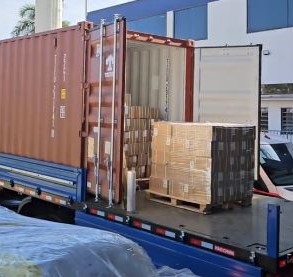
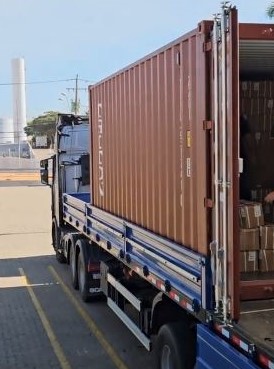
In the world of material supply, the distance between the factory floor and the construction site is where many residential building projects lose their momentum. A common “renovation trap” is the assumption that high-quality digital catalogs automatically translate to high-quality physical arrivals.
When managing a large-scale interior design project, especially one involving international procurement, two variables often go unmanaged: the rigor of quality inspection and the complexity of global logistics.
The Quality Gap
Without a boots-on-the-ground inspection team, you are essentially gambling on the consistency of your building materials. For a commercial building project requiring 500 identical vanity units or 10,000 square meters of matching ceramic tiles, even a 2% margin of error in color or dimensions can cause a catastrophic delay. If the error is only discovered after the shipping container is opened on-site, the cost of replacement and the lost time can be insurmountable. It’s no surprise that up to 30% of construction work involves rework due to errors and defects.
The Logistics Logjam
Logistics isn’t just about shipping; it’s about synchronization. Many projects fail because the lighting arrived before the ceiling was ready, or the furniture sat in a damp warehouse for months because the flooring was delayed at a different port.
The Solution: A Robust Service Infrastructure
To secure your investment, WanjaMall offers a defensive infrastructure designed for the Kenyan market. We ensure the client only has to deal with us to get the project done successfully through:
- Stakeholder Synergy: We bridge the gap between international suppliers, logistics giants, and local technical teams.
- End-to-End Handling: We arrange swift order processing, keep you updated on order status, and handle all professional clearances once the product has arrived.
- National Reach: Our dynamic approach ensures we can deliver and implement top-of-the-range upgrades anywhere in Kenya, managing the “last mile” so you don’t have to.
Mistake #3: Poor Budget Planning & Visual Misalignment
One of the most expensive renovation traps in residential building projects is the disconnect between the conceptual design and the final invoice. It is common for a large-scale interior design project to begin with a stunning vision, only for the developer to realize mid-way through that the specific building materials required are either over budget or physically impossible to source within the project’s geography.
The Visual-Financial Gap
Without integrated budget planning, costs tend to leak through small, unaccounted details. When you source material supply piece-by-piece, the cumulative cost of shipping, taxes, and specialized installation often exceeds the initial estimates. Furthermore, a design that looks good on paper but lacks technical precision can lead to costly on-site modifications.
The Solution: 3D Visualization & What You See is What You Get
Modern procurement at WanjaMall is built on transparency. We never rush to order anything before every aspect of the design—whether picked by the client or curated by our designers—has been confirmed as satisfactory.
- Advance 3D Visualization: Before a single order is placed, a full 3D visualization ensures the finishes align perfectly with your vision.
- Confirmed Satisfaction: We move to the procurement phase only after you have personally vetted and approved the digital representation of your future home.
By aligning the visual rendered output with the logistical reality of the material supply, developers of commercial building projects can commit to a design knowing exactly how it will impact their bottom line.
Mistake #4: Ignoring Project Tracking
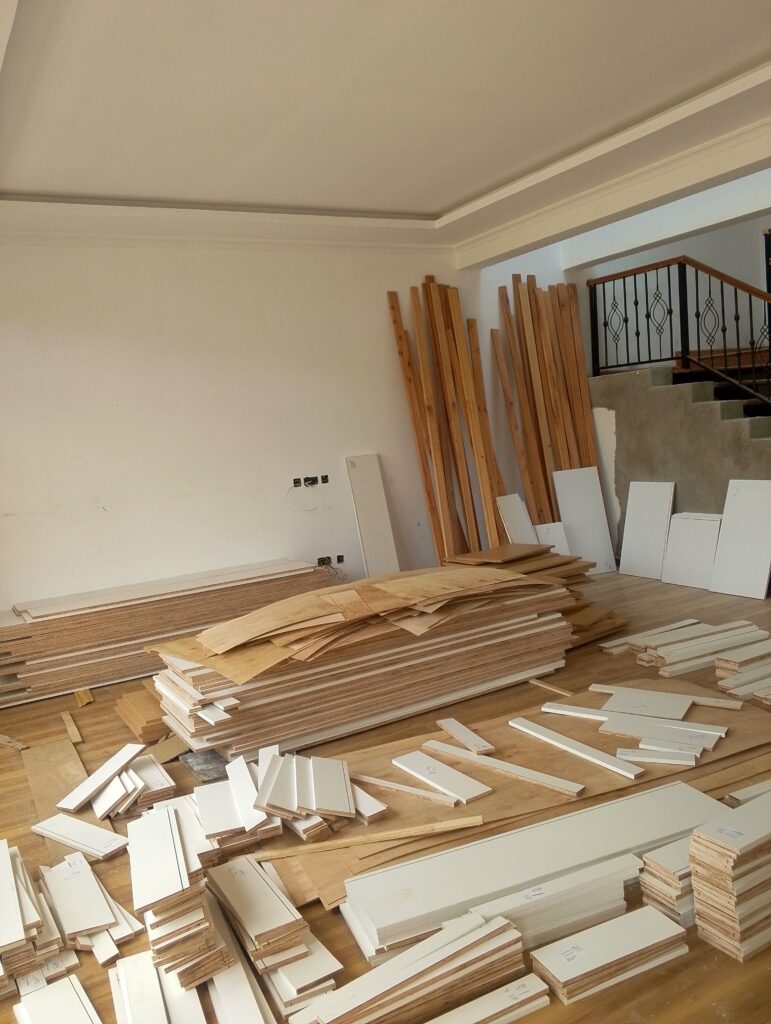
In many large-scale interior design projects, there is a dangerous period between the final payment and the arrival of goods known as the “Black Box.” This is when a developer loses visibility into the production status of custom-building materials.
The Production Disconnect
Without a dedicated system for project tracking, you are at the mercy of the manufacturer’s internal schedule. For a commercial building project, a two-week supply delay in the production of metal & glass facades or staircases can trigger a domino effect, pushing back every subsequent trade on the job site. The renovation trap here is assuming that “in production” means “on schedule.”
The Solution: Real-Time Transparency and Accountability
A professional one-stop building solution eliminates the “Black Box” by providing a transparent bridge between the factory and the site.
- Dedicated Project Coordination: Instead of chasing multiple factory managers, a single point of contact oversees the entire material supply timeline.
- Milestone Reporting: Effective project management includes regular updates on production milestones, quality check completions, and container loading schedules.
- Decades of Reliability: When a partner has years of export experience and has successfully managed hundreds of projects, they have refined the art of anticipatory tracking, identifying potential bottlenecks before they become site-stopping delays.
By prioritizing project tracking, developers can manage their labor force more efficiently and provide accurate completion dates to stakeholders, turning a chaotic procurement process into a predictable, managed workflow.
Mistake #5: Neglecting After-Sales & Technical Support
The final and perhaps most enduring renovation trap is the belief that the project ends when the last container is unloaded. For large-scale interior design projects, the installation phase and the first year of building operation are when the true quality of building materials is tested. Without a framework for after-sales and technical support, a minor product defect can evolve into a major operational headache.
The Support Void
Many suppliers of material supply operate on a transactional basis; once the goods are sold and shipped, the relationship ends. If a complex lighting system has a wiring conflict or a specific batch of ceramic tiles shows unexpected wear in a high-traffic commercial building project, the developer is often left to find local solutions for international products. This “Support Void” can lead to increased maintenance costs and a diminished reputation for the property.
The Solution: A Lifetime Partnership Model
A true one-stop building solution extends far beyond the point of sale. It incorporates a lifecycle approach to the project:
- Technical Guidance: Providing detailed installation manuals and remote (or on-site) technical support ensures that local contractors can install specialized building materials exactly as intended.
- Responsive After-Sales Service: A dedicated service infrastructure, backed by a multi-industry team, means that any issues post-installation are addressed with the same urgency as the initial sale.
By choosing a partner that prioritizes after-sales support, you aren’t just buying materials; you are securing the future-proof operations of your building.
FAQ: Solving the Most Critical Procurement Pain Points
1. “What is the most effective way to source building materials for projects in Kenya?”
The most effective strategy is the WanjaMall model. Sourcing locally often limits variety, while independent importing creates logistical nightmares. We consolidate the entire chain—sourcing globally, handling international logistics, and coordinating with local contractors—ensuring a stress-free experience from port to pillow.
2. “How can I ensure that the interior design I approve actually matches the materials delivered to the site?”
Visual misalignment is a major risk in interior design that requires a provider to bridge the gap between design and manufacturing. By utilizing 3D visualization with actual factory inventory, you ensure that the textures and dimensions in your render are exactly what is being produced. This “What You See is What You Get” approach eliminates the guesswork from material supply.
3. “Does a one-stop service increase the total cost of a residential building project?”
On the contrary, it typically lowers the total cost of ownership. The hidden costs of fragmented procurement—multiple shipping fees, customs clearing headaches, and the cost of contractor delays—quickly add up. By managing the logistics and stakeholders ourselves, we provide a more cost-effective and predictable outcome for Kenyan homeowners.
4. “What are the risks of sourcing building materials for a commercial project from China?”
The primary risks are quality inconsistency and communication gaps. To mitigate these, work with an established partner with a proven track record. Look for companies with extensive export experience and a physical infrastructure, such as massive showrooms and dedicated logistics and distribution centers, that prove they have the capacity to handle commercial building projects at scale.
Conclusion: The Foundation of a Successful Build
Managing a home upgrade is a complex endeavor that requires more than just a list of suppliers; it requires a strategic partnership. At WanjaMall, we ensure that from the moment a product is sourced overseas to the final installation by our construction partners, your project is handled with precision.
Beyond the Transaction
Avoid the chaos of fragmented design management. Partner with WanjaMall, your premier Kenyan e-commerce and dropshipping outlet for customized home lifestyles. We bring together the best in design, logistics, and construction to deliver your dream home in the most stress-free manner possible.
Call us on 0702506178 today and let us handle the complexity while you enjoy the transformation.